
BHQ ISO 639-3
Tukang Besi South
A language of Indonesia
- ISO 639
- bhq
- Alternate Names
- Buton, Tukang-Besi, Wakatobi
- Population
- 130,000 (1995 SIL), increasing. 100,000 in Maluku.
- Location:
- South Sulawesi province: Selayar regency, Bonerate, Kalaotoa, Karompa, and Madu islands; Alor, Ambon, Buru, Maluku, Mongole, Seram, Sulawesi, and Taliabu islands; Southeast Sulawesi province: Tukang Besi archipelago, south islands, and northern Binongko and Tomea islands; Papua province: western areas.
- Language Status
- 6a (Vigorous).
- Classification
- Austronesian, Malayo-Polynesian, Celebic, Eastern, Southeastern, Muna-Buton, Tukangbesi-Bonerate
- Dialects
- Binongko, Bonerate, Tomea (Tomia). Lexical similarity: 70%–75% with Tukang Besi North [khc], 48% with Cia-Cia [cia], 49% with Lasalimu [llm], average of 35% with other nearby languages. Lexical similarity 85% with Binongko and Tomea, 81% with Bonerate, 79% with Tomea and Bonerate.
- Typology
- Pronominal indexing; grammatical status of subject; morphological case; causative; Philippine and Oceanic type language features.
- Language Use
- Vigorous. Used by all, even in communities away from the main islands. Also use Cia-Cia [cia]. Also use Indonesian [ind]. Also use Indonesian Bajau [bdl]. Also use Kamaru [kgx]. Also use Lasalimu [llm]. Used as L2 by Indonesian Bajau [bdl], Kumbewaha [xks].
- Language Development
- Grammar.
- Language Resources
- OLAC resources in and about Tukang Besi South
- Writing
- Unwritten [Qaax].
- Other Comments
- Muslim.
Also Spoken in
Map
Location: South Sulawesi province: Selayar regency, Bonerate, Kalaotoa, Karompa, and Madu islands; Alor, Ambon, Buru, Maluku, Mongole, Seram, Sulawesi, and Taliabu islands; Southeast Sulawesi province: Tukang Besi archipelago, south islands, and northern Binongko and Tomea islands; Papua province: western areas.
Size and Vitality
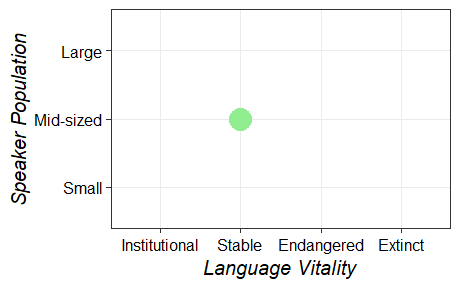 Click to enlarge with explanation
Place in Language Cloud
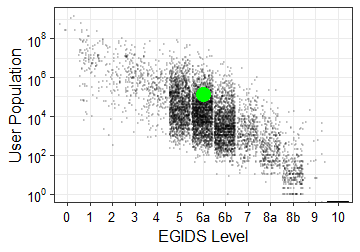 Click to enlarge with explanation