
BDU ISO 639-3
Oroko
Oroko Autonym
A language of Cameroon
- ISO 639
- bdu
- Alternate Names
- Bakundu-Balue, Oroko-East, Oroko-West
- Autonym
- Oroko
- Population
- 106,000 (2000).
- Location:
- South West region: Meme division, all but east edge of Konye subdivision, southwest corner of Kumba subdivision, north two-thirds of Mbonge subdivision; Ndian division, Dikome Balue subdivision, most of Ekondo-Titi subdivision, most of Mundemba subdivision, except eastern edge.
- Language Status
- 5 (Developing).
- Classification
- Niger-Congo, Atlantic-Congo, Volta-Congo, Benue-Congo, Bantoid, Southern, Narrow Bantu, Northwest, A, Lundu-Balong (A.11)
- Dialects
- Lokundu (Bakundu, Bawo, Bekunde, Kundu, Lakundu, Nkundu), Lolue (Babue, Balue, Barue, Lue, Western Kundu), Mbonge, Ekombe (Bekombo, Ekumbe), Londo (Balondo Ba Diko, Balondo Ba Nanga, Lundu), Longolo (Ngolo), Bima, Lotanga (Batanga, Dotanga), Lokoko (Bakoko, Koko).
- Language Use
- Home, church, market. Used by all. All also use Cameroon Pidgin [wes], especially in official settings. Many also use English [eng], in official settings. A few also use Bafaw-Balong [bwt]. A few also use Mokpwe [bri].
- Language Development
- Texts. NT: 2018.
- Language Resources
- OLAC resources in and about Oroko
- Writing
- Latin script [Latn].
- Other Comments
- The Batanga dialect is distinct from Batanga [bnm] (Banoho) and the Batanga dialect of Caka [ckx]; the Bakoko dialect is distinct from Bakoko [bkh]. Traditional religion, Christian.
Also Spoken in
Map
Location: South West region: Meme division, all but east edge of Konye subdivision, southwest corner of Kumba subdivision, north two-thirds of Mbonge subdivision; Ndian division, Dikome Balue subdivision, most of Ekondo-Titi subdivision, most of Mundemba subdivision, except eastern edge.
Size and Vitality
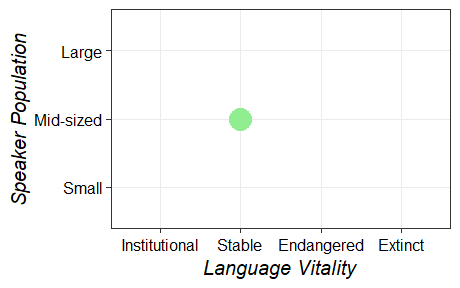 Click to enlarge with explanation
Place in Language Cloud
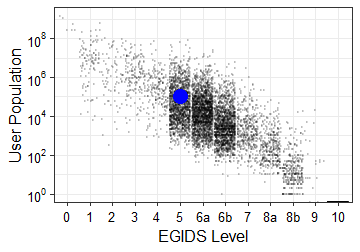 Click to enlarge with explanation