
BDS ISO 639-3
Burunge
Burungaisoo Autonym
A language of Tanzania
- ISO 639
- bds
- Alternate Names
- Bulunge, Burunga Iso, Burungee, Burungi, Kiburunge, Mbulungi, Mbulungwe
- Autonym
- Burungaisoo
- Population
- 28,000 (Mradi wa Lugha za Tanzania 2009). Ethnic population: 30,000 (Dimmendaal and Voeltz 2007).
- Location:
- Dodoma region: Kondoa district, Chambalo, Goima, and Mirambu villages; Manyara region.
- Language Status
- 6a (Vigorous).
- Classification
- Afro-Asiatic, Cushitic, South
- Dialects
- None known. Lexically similar with Gorowa [gow] and Iraqw [irk], 65% with Alagwa [wbj] (Aweki 1996); relatively high similarity between Alagwa and Burunge, despite their belonging to separate branches of the same language family according to their grammars (Kiessling and Mous 2003).
- Typology
- SOV; prepositions, genitives, articles, adjectives, numerals, relatives after noun heads; 5 suffixes; verbal suffixes mark person, number, gender of subject; preverbal clitics mark person of subject; causatives; CV, CVV, CVC (restriction on second CCV); tonal.
- Language Use
- Formerly felt inhibited to speak Burunge in public, but now less common as more and more publications are printed in Burunge. Home, field, some in churches. Used by all. Positive attitudes. Also use Langi [lag]. Also use Swahili [swh].
- Language Development
- No L1 literacy rate reported. Transitional and basic literacy taught for about 10 years. Literature. Newspapers. Dictionary. Grammar. NT: 2016.
- Language Resources
- OLAC resources in and about Burunge
- Writing
- Latin script [Latn].
- Other Comments
- Christian, Muslim, traditional religion.
Also Spoken in
Map
Location: Dodoma region: Kondoa district, Chambalo, Goima, and Mirambu villages; Manyara region.
Size and Vitality
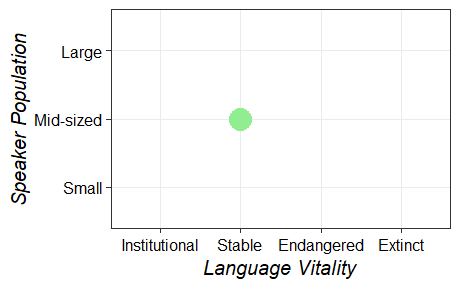 Click to enlarge with explanation
Place in Language Cloud
 Click to enlarge with explanation