
ANL ISO 639-3
Chin, Anu-Khongso
A language of Myanmar
- ISO 639
- anl
- Alternate Names
- Anu-Hkongso Chin, Kaungso, Kaungtso, Khaungtso, Khawngso, Khong, Khongso, No
- Population
- 4,000 (2008), decreasing.
- Location:
- Chin state: Paletwa and Sami townships, 14 villages, between Kaladan and Michaung rivers.
- Language Status
- 6b (Threatened).
- Classification
- Sino-Tibetan, Tibeto-Burman, Ngwi-Burmese, Mru
- Dialects
- Anu, Khongso. Lexical similarity: 96%–98% and high intelligibility between Anu and Khongso dialects, 72%–76% with Mru [mro] but intelligibility is low, 23%–37% lexical similarity with all neighboring Chin languages, but bilingualism is high.
- Typology
- SVO; negation is marked before the verb.
- Language Use
- Fairly strong vitality in Anu and Khongso majority villages. But in mixed villages and intermarried families, Khumi [cnk] and Asang dialect of Eastern Khumi [cek] are now used. Most domains. Some young people, all adults. Positive attitudes. All also use Rakhine [rki]. Also use Burmese [mya]. Also use Eastern Khumi Chin [cek]. Also use Khumi Chin [cnk]. Used as L2 by Eastern Khumi Chin [cek].
- Language Development
- Anu and Khongso have separate literature efforts. Some literacy classes. Bible portions: 2014.
- Language Resources
- OLAC resources in and about Chin, Anu-Khongso
- Writing
- Latin script [Latn].
- Other Comments
- Although the Anu and Khongso varieties are not part of the Kuki-Chin-Naga branch, these groups consider themselves to be Chin. Christian, Buddhist, traditional religion.
Also Spoken in
Map
Location: Chin state: Paletwa and Sami townships, 14 villages, between Kaladan and Michaung rivers.
Size and Vitality
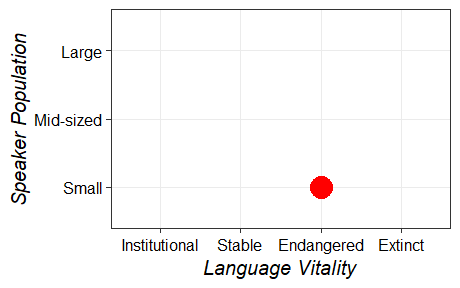 Click to enlarge with explanation
Place in Language Cloud
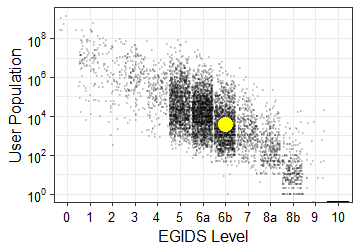 Click to enlarge with explanation