
AIJ ISO 639-3
Inter-Zab Jewish Neo-Aramaic
לשנא דידן (Lišānā Dîdān), לשניד נשן (Lišānîd Nošān) Autonym
A language of Israel
- ISO 639
- aij
- Alternate Names
- Galigalu, Hula’ula, Hulani, Jbeli, Kurdit, Lishana Didán, Lishanid Noshan, Sureth
- Autonym
- לשנא דידן (Lišānā Dîdān), לשניד נשן (Lišānîd Nošān)
- Population
- 3,500 (Leclerc 2018a).
- Location:
- Widespread.
- Language Status
- 8a (Moribund).
- Classification
- Afro-Asiatic, Semitic, Central, Aramaic, Eastern, Central, Northeastern, Trans-Zab
- Dialects
- Arbel (Arbil), Dobe, Koy Sanjaq, Rwanduz, Rustaqa, Shaqlawa, Ranye, Qaladze. 60%–70% inherent intelligibility with Lishanan [lsd] and Hulaulá [huy]. Very different and not inherently intelligible with Christian Aramaic languages and Lishana Deni. Western cluster dialects are Arbel, Dobe, and Shaqlawa. Eastern cluster dialects are Southeastern varieties: Koy Sanjaq, Qaladze, and Ranye. Northern cluster dialects are Rwanduz and Rustaqa (2017 H. Mutzafi).
- Language Use
- Older adults only. Shifted to Hebrew [heb].
- Language Development
- Grammar.
- Language Resources
- OLAC resources in and about Inter-Zab Jewish Neo-Aramaic
- Writing
- Hebrew script [Hebr].
- Other Comments
- Originally spoken in the area of Arbil, Iraq, between the Great Zab and Little Zab rivers (2017 H. Mutzafi). Jewish.
Also Spoken in
Map
Location: Widespread.
Size and Vitality
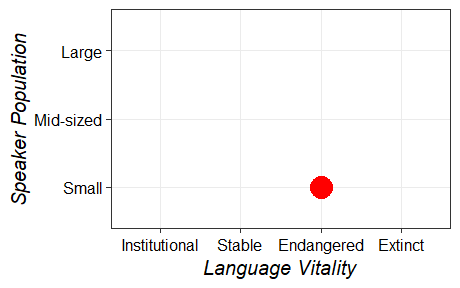 Click to enlarge with explanation
Place in Language Cloud
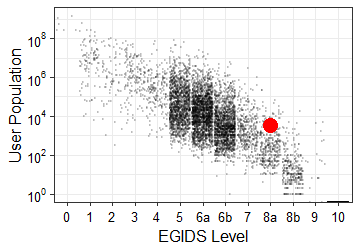 Click to enlarge with explanation