
AII ISO 639-3
Assyrian Neo-Aramaic
ܐܬܘܪܝܐ (Ātūrāyā), ܣܘܪܬ (Sūrët) Autonym
A language of Iraq
- ISO 639
- aii
- Alternate Names
- Assyrian, Assyrianci, Lishana Aturaya, Neo-Syriac, Sooreth, Suret, Sureth, Suryaya Swadaya
- Autonym
- ܐܬܘܪܝܐ (Ātūrāyā), ܣܘܪܬ (Sūrët)
- Population
- 179,000 in Iraq (2020). Ethnic population: 4,250,000 (1994). Total users in all countries: 594,050.
- Location:
- Dahuk and Ninawa governorates: 2 areas, one northeast of Buhayrat al Mawsil, the other, at Turkish border; scattered in Al Basrah, Arbil, Baghdad, and Kirkuk governorates.
- Language Status
- 6b* (Threatened). Recognized language (2005, Constitution, Article 4(1)), constitutional term: Syriac. Unevenly recognized except in Kurdistan Region.
- Classification
- Afro-Asiatic, Semitic, Central, Aramaic, Eastern, Central, Northeastern
- Dialects
- Urmi (Sipurghan, Solduz, Urmi Assyrian), Northern Assyrian (Baz, Dez, Gavar, Jilu, Qudshanis, Salamas, Upper Barwari, Van), Central Assyrian (Anhar, Mar Bishu, Nochiya, Shamezdin, Tergawar), Western Assyrian (Lewin, Lower Barwari, Tal, Tkhuma), Sapna (Aradhin, Benatha, Daudiya, Inishke, Tina). Similar linguistically to other Northeastern Aramaic varieties. Inherent intelligibility is difficult to estimate due to extensive exposure throughout the Assyrian diaspora to many dialects, especially Urmi and Iraqi Koine. As a result, intelligibility between dialects is as high as 80%–90%. Urmian group subdialects: Urmi, Sipurghan, Solduz; Northern Group: Salamas, Van, Jilu, Gavar, Qudshanis, Upper Barwari, Dez, Baz; Central Group: Mar Bishu, Nochiya (Shamezdin), Tergawar, Anhar; Western Group: Tkhuma, Lower Barwari, Tal, Lewin; Sapna Group: Aradhin, Tina, Daudiya, Inishke, Benatha. Standard literary Assyrian is based on Urmi. Many left original areas and developed a common spoken and written form based on the prestigious Urmi dialect as spoken in Baghdad, the United States, and elsewhere (Iraqi Koine). Most Christians understand it. This Urmi variety is different from Lishán Didán Urmi variety. All dialects of Western, Northern, and Central Assyrian are spoken in Syria. A member of macrolanguage Syriac [syr].
- Language Development
- Radio. Grammar. Bible: 1852–1919.
- Language Resources
- OLAC resources in and about Assyrian Neo-Aramaic
- Writing
- Cyrillic script [Cyrl]. Syriac script [Syrc].
- Other Comments
- Religious separation of Assyrian and Chaldean happened in the 16th century. Christian.
Also Spoken in
- Location
- Yerevan province: scattered.
- Language Status
- 7 (Shifting)
- Other Comments
- Non-indigenous. The Assyrian and Chaldean separated denominationally during the 16th century. Christian. View other languages of Armenia
Language Name
Assyrian Neo-Aramaic
User Population
2,700 in Armenia (Leclerc 2017a). Ethnic population: 15,000.
- Language Status
- Unestablished
- Other Comments
- Non-indigenous. View other languages of Australia
Language Name
Assyrian Neo-Aramaic
User Population
28,300 in Australia (2016 census).
- Language Status
- Unestablished
- Other Comments
- Non-indigenous. View other languages of Azerbaijan
Language Name
Assyrian Neo-Aramaic
User Population
1,500 in Azerbaijan (Leclerc 2017b).
- Language Status
- Unestablished
- Other Comments
- Non-indigenous. View other languages of Canada
Language Name
Assyrian Neo-Aramaic
User Population
16,100 in Canada (2016 census). Ethnic population: 38,000.
- Language Status
- Unestablished
- Other Comments
- Non-indigenous. View other languages of United Kingdom
Language Name
Assyrian Neo-Aramaic
User Population
5,000 in United Kingdom. Ethnic population: 14,000.
- Location
- Transcaucasia area: scattered.
- Language Status
- 8a (Moribund)
- Other Comments
- Non-indigenous. ‘Aisor’ is the Russian name for the people. Christian. View other languages of Georgia
Language Name
Assyrian Neo-Aramaic
User Population
3,400 in Georgia (Leclerc 2015). Ethnic population: 14,000.
- Language Status
- Unestablished
- Other Comments
- Non-indigenous. View other languages of Greece
Language Name
Assyrian Neo-Aramaic
User Population
2,000 in Greece. Ethnic population: 9,000.
- Location
- West Azerbaijan province: west of Lake Urmia; many in Reza’iyeh (Rizaiye) and Tehran.
- Dialects
- Urmi.
- Language Status
- 6b (Threatened)
- Other Comments
- Non-indigenous. Religious separation of Assyrian from Chaldean happened in the 16th century. Christian. View other languages of Iran
Language Name
Assyrian Neo-Aramaic
User Population
15,000 in Iran (1994). Ethnic population: 109,000 (2019).
- Language Status
- Unestablished
- Other Comments
- Non-indigenous. View other languages of Kuwait
Language Name
Assyrian Neo-Aramaic
User Population
8,100 in Kuwait (2020 Joshua Project).
- Location
- Beyrouth.
- Language Status
- Unestablished
- Other Comments
- Non-indigenous. View other languages of Lebanon
Language Name
Assyrian Neo-Aramaic
User Population
2,330 in Lebanon (2020). Ethnic population: 40,000.
- Language Status
- Unestablished
- Other Comments
- Non-indigenous. View other languages of New Zealand
Language Name
Assyrian Neo-Aramaic
User Population
1,670 in New Zealand (2013 census).
- Language Status
- Unestablished
- Other Comments
- Non-indigenous. View other languages of Russian Federation
Language Name
Assyrian Neo-Aramaic
User Population
4,470 in Russian Federation (2010 census). Ethnic population: 35,000.
- Language Status
- Unestablished
- Other Comments
- Non-indigenous. View other languages of Sweden
Language Name
Assyrian Neo-Aramaic
User Population
52,000 in Sweden (2020 Joshua Project). , based on ethnicity.
- Location
- Al Hasakah governorate: Khabur river banks, Turkey border, over 30 villages; some in Al Hasakah city.
- Language Status
- 6b (Threatened)
- Other Comments
- Non-indigenous. View other languages of Syria
Language Name
Assyrian Neo-Aramaic
User Population
164,000 in Syria (2019). Ethnic population: 700,000.
- Location
- Mardin province: Mardin Merkez district; Sirnak province: Silopi district. Both areas near Iraq border.
- Language Status
- Unestablished
- Other Comments
- Non-indigenous. View other languages of Turkey
Language Name
Assyrian Neo-Aramaic
User Population
27,600 in Turkey (2019).
- Location
- California; Illinois: Chicago.
- Language Status
- Unestablished
- Other Comments
- Non-indigenous. View other languages of United States
Language Name
Assyrian Neo-Aramaic
User Population
80,000 in United States. Ethnic population: 550,000.
Map
Location: Dahuk and Ninawa governorates: 2 areas, one northeast of Buhayrat al Mawsil, the other, at Turkish border; scattered in Al Basrah, Arbil, Baghdad, and Kirkuk governorates.
Size and Vitality
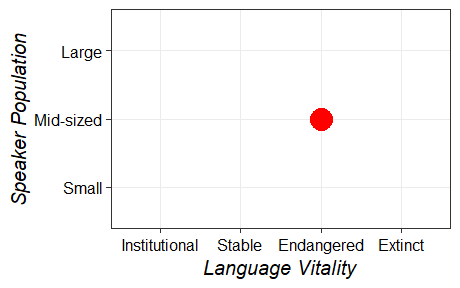 Click to enlarge with explanation
Place in Language Cloud
 Click to enlarge with explanation